“May your choices reflect your hopes, not your fears.”
Nelson Mandela
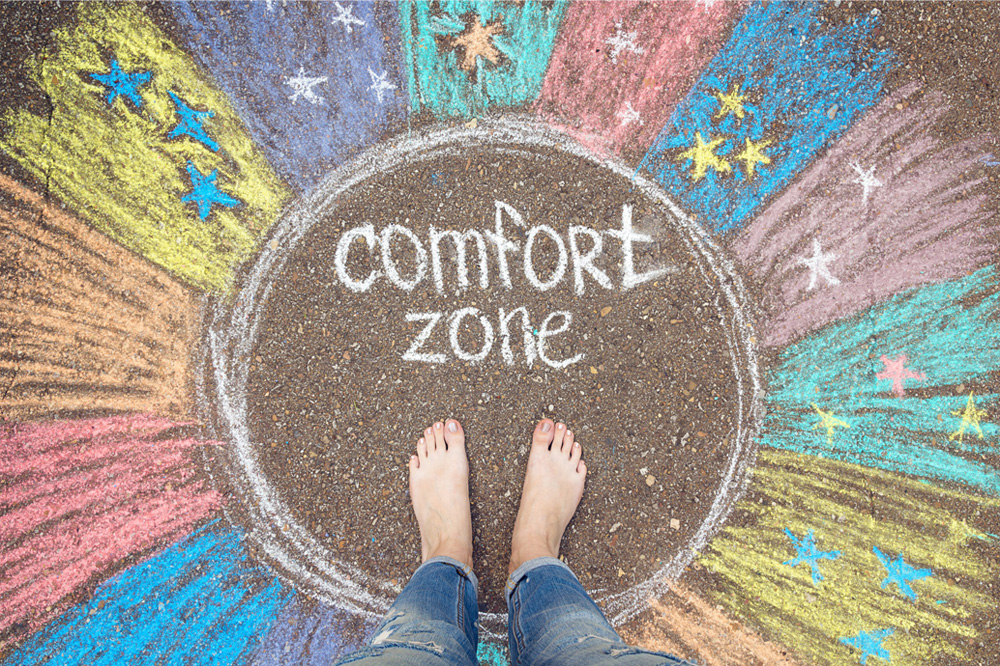
Having a clear target, moral support, and a readiness to ‘enjoy the journey’, can make the first step of crossing the threshold of the fear zone less daunting.
Persevering through the fear zone, problem-solving challenges, and establishing helpful habits leads into the learning zone, where you gain new skills and deal with challenges resourcefully.
After a learning period, a new comfort zone is created, expanding one’s ability to reach even greater heights. This is what it means to be in the growth zone.
It’s important to state that like most behavioral change attempts, moving into the growth zone becomes harder without some level of self-awareness. Thus, it can be beneficial to consider:
How big are your zones?
Across every life domain, everyone’s zones vary in size. To leave your comfort zone, you must appreciate its outer limits. Similarly, you must develop an intuitive sense of where your panic zone lies. Taking on challenges that lie somewhere in between will stretch you, leading to growth and learning.
What are your strengths?
Understanding and capitalizing on personal strengths can be of great use. Most people have experience leaving the comfort zone in at least one area of life, and there are usually plenty of insights to be uncovered from this experience.
The process of moving from the comfort zone to a growth zone may not be linear. Peaks, troughs, and plateaus often complicate the journey. Sometimes, we even need to retreat to the comfort zone periodically before mustering the strength to leave again.